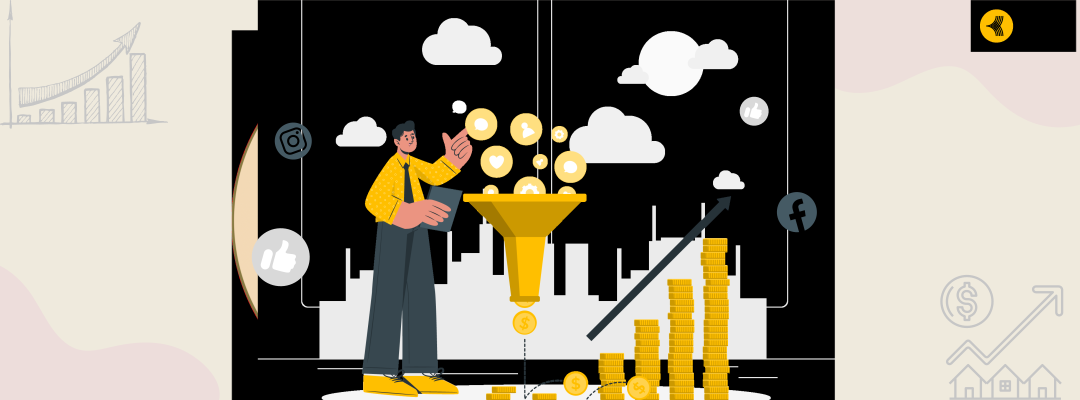

India’s influencer marketing industry is projected to reach ₹3,500 crore by 2026, growing at an 22% CAGR (EY & Big Bang Social). As audiences increasingly rely on social proof, brands are scaling their investments. This guide covers how to build a profitable, compliant influencer marketing strategy in India.
Table of Contents
ToggleWhat Is Influencer Marketing?
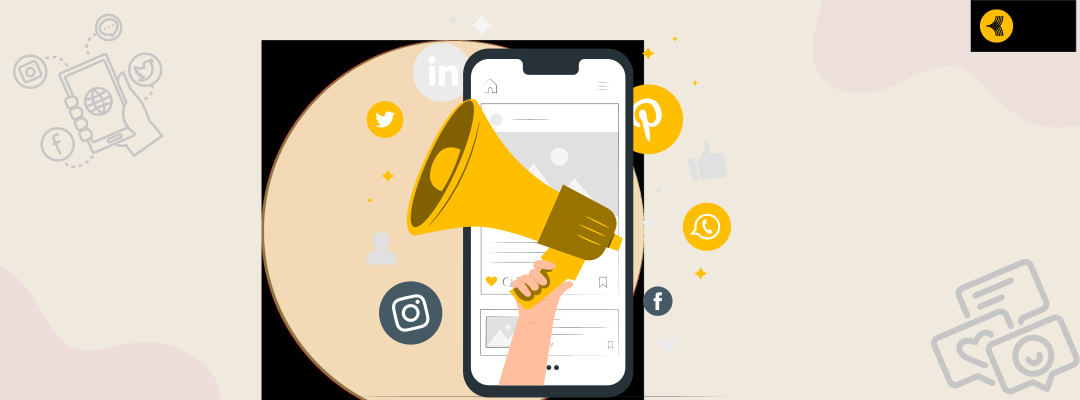
Let’s clarify the influencer marketing meaning. It is a strategic approach where brands partner with digital creators who have cultivated highly engaged audiences. Because these creators act as trusted peers, their recommendations function as powerful social proof, driving measurable awareness and conversions. In 2026, we are witnessing the complete “Institutionalisation of Influence,” where brand influencer collaboration has shifted from a peripheral tactic to a formalized pillar of the creator economy.
Why Influencer Marketing Is Growing So Fast in India
India houses over 700 million internet users, with millennials and Gen Z driving unparalleled social media consumption. The proliferation of short-form video, specifically Instagram reels marketing and YouTube Shorts has fundamentally changed product discovery. Furthermore, India’s vast linguistic diversity makes traditional, one-size-fits-all advertising inefficient. Brands are turning to vernacular content / regional creators to speak directly to diverse demographics in their native languages, accelerating the formalization of influencer marketing India.
How Influencer Marketing Works
The effectiveness of this channel is rooted in established trust. A brand identifies a creator whose audience mirrors their target consumer demographic. Through structured sponsored content, the creator integrates the brand into their natural narrative. This authentic alignment bypasses ad fatigue and carries the consumer directly from initial discovery through to the Sustainance stage of the marketing funnel, driving both brand affinity and measurable sales.
Types of Influencers
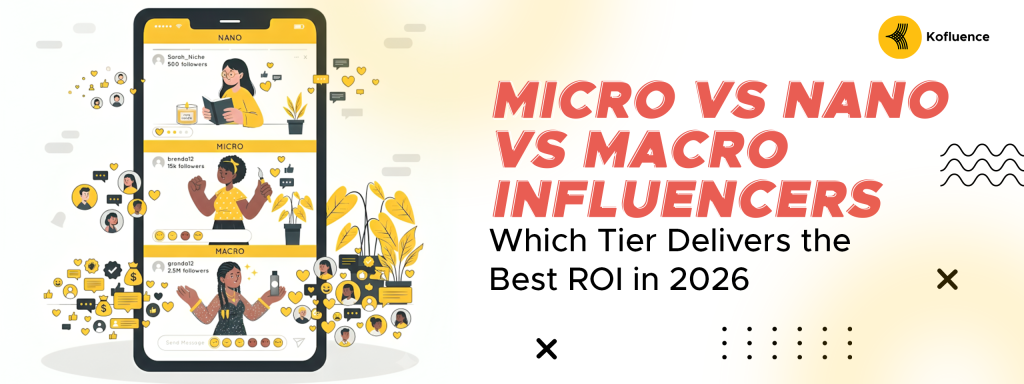
An optimized influencer marketing strategy deploys a calculated mix of the mega/macro/micro/nano influencer tiers based on specific campaign goals:
- Nano Influencers (1,000–10,000 followers): Drive ultra-niche focus and high trust. Ideal for localized advocacy and community building.
- Micro Influencers (10,000–100,000 followers): The sweet spot for micro influencer marketing, offering an optimal balance of strong engagement rate and cost-efficient reach.
- Macro Influencers (100,000–1M followers): Professional content creators best utilized for scaling visibility and reinforcing brand recall.
- Mega Influencers / Celebrities (1M+ followers): Command the broadest reach; utilized primarily for national product launches and mass-market positioning.
Benefits of Influencer Marketing
The influencer marketing benefits extend directly to the bottom line for Indian brands:
- Accelerated Trust: High-quality UGC (user-generated content) acts as peer review, shortening the consideration phase.
- Hyper-Targeted Reach: Brands can segment campaigns geographically and linguistically using regional creators.
- Cost-Efficient Acquisition: A well-executed social media influencer marketing campaign frequently delivers a lower Customer Acquisition Cost (CAC) compared to traditional digital ads.
- Content Volume: Brands gain access to diverse, mobile-first creative assets that can be repurposed across owned channels.
Influencer Marketing vs Affiliate Marketing vs Celebrity Endorsement
Understanding the distinction between affiliate marketing vs influencer marketing and traditional endorsements ensures efficient budget allocation.
| Feature | Influencer Marketing | Affiliate Marketing | Traditional Celebrity Endorsement |
|---|---|---|---|
| Primary Goal | Trust, Awareness, Engagement | Direct Sales, Conversions | Mass Reach, Brand Prestige |
| Payment Structure | Flat fee, per post, or barter | Commission on generated sales | High upfront retainer |
| Content Style | Authentic, UGC (user-generated content) | Highly promotional, link-focused | Scripted, highly polished |
| Best Used For | Building sustained community trust | Bottom-funnel performance marketing | National brand repositioning |
Influencer Marketing Cost in India (2026)
How much does influencer marketing cost in India? The influencer marketing cost India is dictated by platform, creator tier, and deliverable scope. Below is an updated influencer rate card benchmark in INR:
- Nano Influencers: Product barter to ₹5,000 per deliverable.
- Micro Influencers: ₹5,000 to ₹50,000 per deliverable.
- Macro Influencers: ₹50,000 to ₹3,00,000 per deliverable.
- Mega Influencers: ₹3,00,000 to several crores per overarching campaign.
(The above figures are as estimated by market research and are directional and may not reflect industry-wide adoption.)
Best Platforms for Influencer Marketing in India
Choosing the right channel is the foundation of how to do influencer marketing correctly:
- Instagram: The dominant force for fashion, beauty, and D2C brands. Success here relies heavily on adapting to the Instagram Algorithm with short-form Reels.
- YouTube: A YouTube influencer collaboration remains the gold standard for long-form educational content, tech reviews, and detailed product demonstrations.
- Regional Platforms: ShareChat, Moj, and Josh are critical for brands scaling into Bharat via Tier-2 and Tier-3 markets.
- LinkedIn: The fastest-growing platform for B2B creator campaigns.
To execute seamlessly across these environments, leveraging a dedicated influencer marketing platform like Kofluence ensures clean attribution and campaign visibility.
Real Influencer Marketing Examples from India
Reviewing active influencer marketing examples highlights the power of localization:
- Pigeon (Stovekraft) via Kofluence: To drive localized product discovery, Pigeon partnered with Kofluence to activate trusted regional culinary creators. This targeted vernacular approach drove immediate engagement, demonstrating the exact value an influencer marketing agency India brings to D2C performance.
- boAt: The audio giant boAt aggressively utilizes a tiered approach, mixing micro-creators with mega-influencers (like cricketers) to establish their products as lifestyle essentials for Gen Z.
- Mamaearth: Built its foundation by mobilizing a massive network of mom-bloggers and nano-creators. These creators acted as a decentralized brand ambassador network, delivering authentic reviews of toxin-free products that traditional ads could not replicate.
How to Create an Influencer Marketing Strategy
- Define the Objective: Establish whether the campaign is driving top-of-funnel awareness, or bottom-of-funnel conversions.
- Vet Creators on Data: Look past vanity metrics. Analyze the creator’s true engagement rate, audience geography, and historical brand safety.
- Draft a Clear, Flexible Brief: Ensure mandatory brand claims (e.g., active ingredient percentages) are explicitly stated, but allow the creator creative freedom to integrate them without clichéd, artificial language.
- Track and Optimize: Monitor performance in real-time to shift budgets toward the highest-performing creator assets.
How to Measure Influencer Marketing ROI
To accurately assess influencer ROI / KPIs, brands must monitor a blend of engagement and conversion metrics. Top-of-funnel tracking includes reach, view-through rates, and sentiment analysis. For bottom-of-funnel performance, brands must track conversions using dedicated UTM parameters, specific discount codes, and affiliate links. Comparing the resulting Customer Acquisition Cost (CAC) against other paid channels reveals the true financial efficiency of the campaign.
ASCI Guidelines Every Indian Brand Should Know
Is influencer marketing regulated in India? Yes. Adhering to the ASCI guidelines / influencer disclosure framework is a strict brand-safety requirement, not just a legal formality. Overseen by the CCPA and ASCI, the rules mandate that any paid or gifted content must feature clear, upfront disclosure labels (such as #ad or #sponsored). Video content requires verbal disclosures, and stringent parameters exist for creators discussing health and finance. Non-compliance risks severe consumer protection penalties.
Influencer Marketing Trends for 2026
The market is rapidly evolving. We are seeing a massive shift toward AI-powered creator matchmaking and the deeper integration of live commerce. For a comprehensive analysis of the data shaping the industry’s future, download Kofluence’s Influencer Marketing Report 2026. If you are ready to integrate the latest influencer marketing trends into your operational roadmap, talk to an influencer marketing expert today to build your strategy.
Frequently Asked Questions
1. What is influencer marketing?
Influencer marketing is a strategy where brands partner with social media creators who have engaged audiences to promote products or services. It works because influencers have built trust with followers, so their recommendations act as social proof, driving awareness, engagement, and purchase decisions more authentically than traditional ads.
2. What are the types of influencers?
Influencers are typically grouped by follower count: nano (1,000–10,000), micro (10,000–100,000), macro (100,000–1M), and mega/celebrity (1M+). Nano and micro influencers usually deliver higher engagement and niche trust, while macro and mega influencers offer broader reach for large-scale awareness campaigns.
3. How big is the influencer marketing industry in India?
India’s influencer marketing industry is projected to reach ₹3,375 crore (~$405 million) by 2026, growing at an 18% CAGR, according to the EY and Big Bang Social report. Growth is driven by rising smartphone penetration, short-form video, and increasing brand budgets across FMCG, fashion, and beauty.
4. Is influencer marketing regulated in India?
Yes. ASCI’s 2026 Guidelines for Influencer Advertising mandate clear, upfront disclosure (#ad, #sponsored) for any paid or gifted content, verbal disclosure in videos, and special rules for health/finance influencers and AI-generated virtual influencers. Non-compliance can lead to penalties under the Consumer Protection Act
5. How much does influencer marketing cost in India?
Costs vary by tier: nano-influencers may charge a few thousand rupees or accept free products; micro-influencers typically charge ₹5,000–₹50,000 per post; macro and celebrity influencers can command lakhs to crores per campaign, depending on reach, platform, and deliverables.
6. Which platforms are best for influencer marketing in India?
Instagram and YouTube dominate influencer marketing in India for their visual and video-first formats. Regional platforms like ShareChat, Moj, and Josh help brands reach Tier-2/3 audiences in vernacular languages, while LinkedIn is emerging for B2B influencer campaigns.
7. How do brands measure influencer marketing ROI?
Brands track engagement rate, reach, click-throughs via UTM links or discount codes, follower growth, and conversions. Beyond sales, metrics like brand awareness lift, inbound leads, and sentiment help capture the full value of influencer campaigns.
8. What is the difference between influencer marketing and affiliate marketing?
Influencer marketing focuses on brand awareness and authentic endorsement, often paid upfront; affiliate marketing rewards influencers based on performance, like sales generated through tracked links. Many Indian brands now blend both models for accountability and reach.
9. Why is influencer marketing effective for Indian brands?
India has over 700 million internet users, with Gen Z and millennials driving social media adoption. Influencers offer authentic, relatable content that builds trust faster than traditional ads, and India’s linguistic diversity allows brands to run hyper-targeted regional campaigns.
10. What mistakes should brands avoid in influencer marketing?
Common mistakes include prioritizing follower count over engagement, skipping influencer vetting, writing vague briefs, ignoring ASCI disclosure rules, and focusing only on conversions rather than tracking brand awareness and audience quality.