

It has become the single most important driver of audience trust, and nowhere is this more evident than in Bharat’s rapidly expanding regional creator economy.
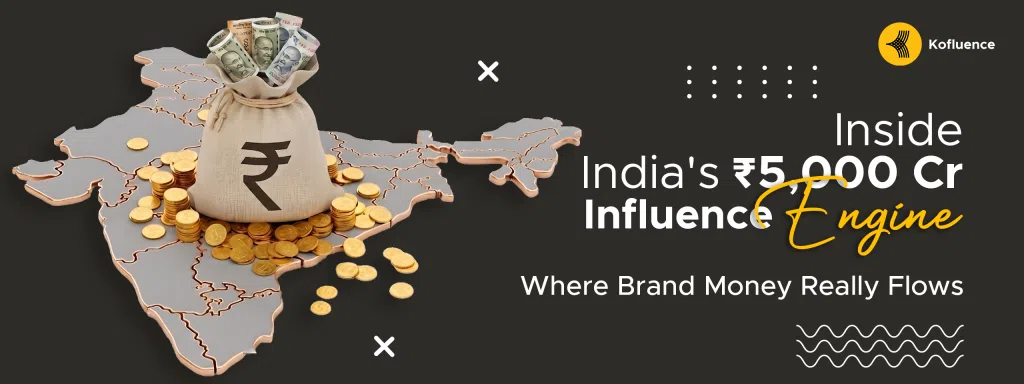
In 2025–26, India’s influencer marketing industry crossed ₹3,000–3,500 crore in spending, growing at roughly 22% CAGR year over year. The deeper transformation is geographic, cultural, and psychological: a shift away from glossy metro storytelling toward something rawer, more local, and far more powerful.

The Trust Divide: Metro Reach vs. Bharat Resonance
For years, brands built India campaigns from Mumbai boardrooms and deployed them outward. The assumption was that scale meant reach, and reach meant results. The data in 2026 tells a different story.
Tier 3 and Tier 4 creators now deliver 4.5–5% engagement rates compared to 3.5–4% in metros, at a fraction of the cost. Campaign spends in these markets run between ₹30,000–80,000 per activation versus ₹3.5–4 lakh in metro markets. The ROI differential is not marginal. It is structural.
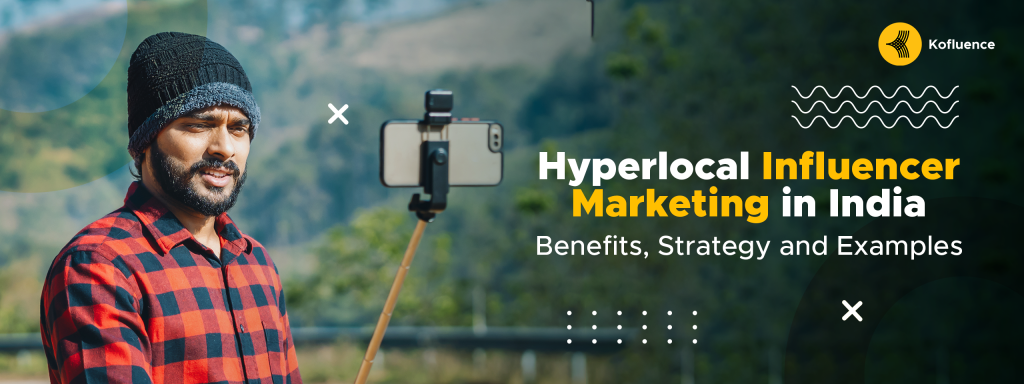
This is the heart of lo-fi trust: a creator in Patna filming a product review on a phone, in the register of Hindi that people in Bihar actually speak, is not a compromise on quality. For the audience watching, it is the quality. The lack of polish signals the presence of something more valuable: authentic creator content that feels like advice from a neighbor, not an advertisement from a stranger.
Why Raw Content Outperforms Polished Production
The paradox at the center of modern influencer marketing is this: as production tools have become more sophisticated, the content that performs best has become increasingly unpolished.
According to survey data from over 1,000 creators, 49.2% say audiences prefer raw, authentic content over high-production alternatives. A further 35% say it depends on context. Only a small minority believes polished production consistently outperforms.
This is not sentiment. It is measurable consumer behavior. Audiences, particularly in non-metro India, have a finely tuned radar for inauthenticity. A well-lit skincare tutorial with professional-grade editing loses ground to a shaky phone video where someone genuinely reacts to a product for the first time. The audience can tell the difference. They always could.
As one senior brand marketing voice at Emami put it: a micro-creator with 40,000 loyal followers in a Tier 2 city who genuinely uses the product is worth more than a macro influencer with 2 million followers who fits a brand into their posting schedule. The authenticity is already there. The job is to find it and get out of the way.
For a creator filming in their kitchen at 7 AM, that lo-fi setting is not a limitation. It builds more trust with a core Bharat consumer than a glossy studio ever will. That is not a compromise on quality. That is the quality.
The Language of Belonging: Vernacular as a Trust Signal
Creator authenticity in Bharat is inseparable from language. Language is not merely a communication tool in India. It is a belonging signal.
Today, 68.2% of creators use Hindi as their primary language, while 23.9% create in regional languages including Tamil, Telugu, and Kannada. More notably, over 62% of creators report brands are requesting more regional and vernacular content, a marked increase from previous years.
When a creator speaks in the particular register of Hindi that people actually use in Bihar, not the sanitized Bollywood version or the clipped tones of news broadcasts, something different happens. The distance collapses. The recommendation lands not as advertising but as counsel from someone who genuinely understands the audience’s context.
This is what separates regional creators in India from national celebrities in the trust economy. A celebrity ad is polished but distant. People know celebrities are paid to show up. When a local creator talks about a product, audiences feel the creator has actually used it and understands their everyday reality. Humor amplifies this: in Bharat, real beats are aspirational almost every time.
Brands across FMCG, personal care, and fintech are actively building internal vernacular capability and developing dedicated regional creator rosters, not as an afterthought but as a primary strategy.
Micro and Nano Creators: Where Community-Driven Influence Lives
The influencer industry spent its first decade chasing scale. More followers meant more reach, more reach meant more impressions, more impressions meant more brand value. In 2026, that equation has been complicated by a more important variable: community-driven influence rooted in genuine relationships.
A creator with 50,000 highly engaged followers in Coimbatore consistently outperforms a celebrity with 5 million generic followers when the objective is purchase intent or community trust. This is not a hypothesis. It is the operating reality for brands that have worked in regional markets.
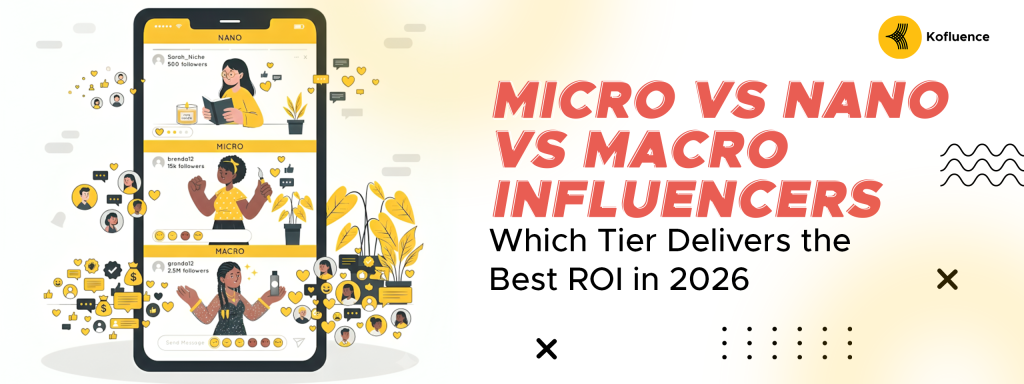
The creator ecosystem reflects this: 61.1% of active creators are in the Nano tier (1K–10K followers), with another 32.5% in the Micro range (10K–100K). This is not the bottom of the market. It is where authentic audience engagement actually lives. These creators are not media channels. They are trusted individuals. Audiences follow them for who they are, not for production quality. That relational value cannot be replicated at scale by any synthetic tool.
For hyperlocal and regional campaigns specifically, 52% of marketers find creators with 10,000–100,000 followers best suited, where trust and cultural resonance outperform raw scale. Authentic influencer marketing at this tier is not just effective. It is, increasingly, the standard.
De-Influencing and Verification: The New Credibility Architecture
One of the most telling signals of where influencer trust is heading is the rise of de-influencing. This is the practice of creators telling their audiences not to buy something, or walking back a previous recommendation.
At first glance, this appears to be a commercial risk. In practice, it is one of the most powerful trust-building tools available to a creator. When a creator tells their audience that a product disappointed them or that a trending item is not worth the price, something counterintuitive happens: the audience trusts every other recommendation they make more. The signal is clear: this person has an actual opinion, not just a posting schedule.
Today, 9.2% of creators have produced de-influencing content, and the practice is growing. Brands that understand this dynamic are beginning to build it into creator relationships deliberately, allowing and even encouraging creators to exercise genuine editorial judgment.
The short-term cost of an honest review is far less than the long-term cost of a creator whose audience no longer believes them.
Meanwhile, Indian audiences are becoming more sophisticated about sponsored content. They are faster at identifying undisclosed partnerships and exaggerated claims. ASCI’s disclosure guidelines have formalized this expectation at the regulatory level, but the demand for verification is also coming bottom-up. Creator credibility is now actively policed by communities themselves.
The Infrastructure Behind Bharat’s Creator Rise
The cultural shift toward lo-fi trust is real, but it has been enabled by equally real infrastructure improvements. For much of the creator economy’s first decade, a creator in Bihar or Jharkhand faced concrete barriers: spotty internet, payment cycles stretching 60–90 days, and enterprise brands requiring GST invoices that small-town creators had no easy way to produce.
That picture has changed substantially. UPI has enabled faster, smaller payments. Influencer marketing platforms have built discovery tools that help brands identify creators by region, language, and demographic with precision. Mobile-first content tools have collapsed production costs to near zero.
A creator from UP or Odisha no longer needs to relocate to a metro to build a national audience. The infrastructure gap is closing, and as it does, the grassroots creator economy in India’s smaller cities and towns is scaling into something genuinely institutional.
Tier 2, 3, and 4 cities now account for 43–48% of all influencer campaigns, up from a footnote in earlier years. The centre of gravity in India’s creator economy has shifted. Brands that continue to treat Bharat as a regional afterthought are competing against those already building dedicated vernacular infrastructure and losing ground steadily.
What Lo-Fi Trust Means for Brands in 2026
The strategic implication is not that brands should lower their production standards. It is that they should recalibrate what quality means in the context of their target audience.
For a brand serious about growing in Bharat, authentic creator content is not a category-B activation. It is the primary vehicle for building audience loyalty in communities where trust is earned through familiarity, not fame. A creator who sounds like the person watching, who films in spaces the audience recognizes and speaks the language they actually use, carries influence that no celebrity fee can manufacture.
The brands building sustainable creator relationships in these markets are also moving beyond one-off campaigns. Long-term partnerships allow creators to develop genuine product knowledge, produce more authentic audience engagement, and build a commercial narrative that an audience can follow over time. Over 75% of creators prefer sustained partnerships over transactional briefs, and the ROI evidence is supporting that preference.
The lo-fi aesthetic is not a constraint. It is the medium through which trust flows in Bharat’s creator economy. The brands and creators who internalize this are not just participating in this market. They are defining it.
Interested in building authentic influencer strategies for Bharat’s creator economy? Explore how data-backed, community-first approaches are delivering results at scale: kofluence.com
The creator economy’s next decade will not be won by the loudest voices. It will be built by the most trusted ones.