
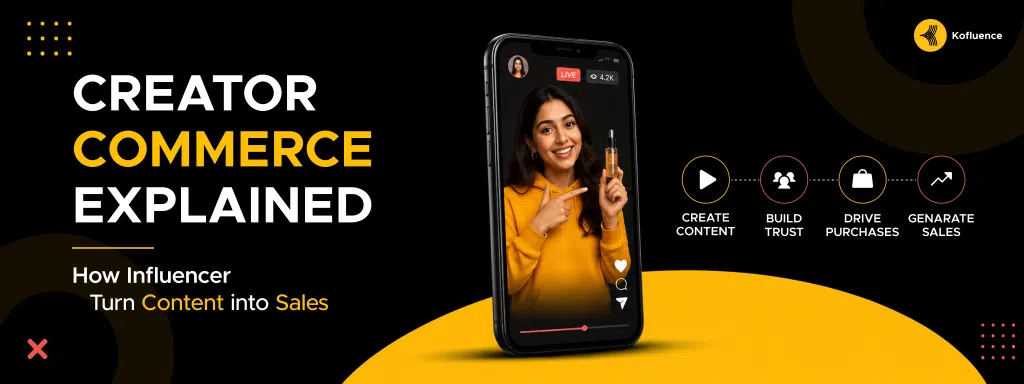
Creator Commerce turns the moment of discovery into the moment of purchase. As Indian audiences increasingly shop from the creators they trust, brands are rebuilding their sales engines around creator-led commerce. This guide explains how it works and how to win with it.
Table of Contents
ToggleKey Findings
- India’s creator economy is projected to add roughly $25 billion to the country’s e-commerce by 2030 as creator storefronts and videos become instantly shoppable.
- Shoppable live commerce in India was valued at roughly $10 billion in 2026, with fashion and beauty leading adoption.
- Over 40% of eligible Indian creators have enrolled in YouTube’s shopping affiliate program, tagging more than three million videos with products.
- Livestream shopping converts at up to 30%, against the 2% to 3% typical of traditional e-commerce.
What Is Creator Commerce?
Definition of Creator Commerce
Creator Commerce is the practice of creators driving product discovery and sales directly through their content, merging content commerce and digital commerce into one motion. Here, content creators act as both media channel and storefront, and creator monetization comes from the sales their content generates.
How Creator Commerce Works
A creator features a product in authentic content, an engaged audience responds with intent, and shoppable content, affiliate links, or in-app checkout carry that intent to a completed order. Each step compresses the purchase funnel, and because activity links to trackable events, brands measure conversion rate, click-through rate (CTR), and revenue precisely, which distinguishes influencer commerce from awareness-only influencer marketing.
Why Creator Commerce Is Growing in India
India has crossed 900 million social media users, and the number of digital creators has grown nearly threefold to an estimated 3.5 to 4.5 million. Improvements in UPI payments, logistics, and the ONDC network have removed friction from social shopping, while Bharat consumers in Tier 2 and Tier 3 cities increasingly buy through vernacular creators who speak their language.
Creator Commerce vs Influencer Marketing vs Social Commerce
Key Differences Between the Three Models
Influencer marketing builds awareness and brand affinity. Social commerce describes selling that happens natively inside social platforms through shoppable posts and in-app checkout. Creator Commerce sits at the intersection, using a creator’s trusted voice to drive measurable sales, with influencer sales attributed to specific creators and content.
Which Model Is Best for Brands?
The strongest influencer campaigns use all three together: awareness through influencer marketing, demand capture through social commerce, and conversion through creator commerce. For performance-focused brands, especially D2C brands in India, leading with creator commerce ties every rupee to a traceable outcome.
How Creator Commerce Turns Content into Sales
Product Discovery Through Content
Discovery now begins inside content, as a reel, short, or livestream introduces a product in genuine use and drives more purchase intent than static formats.
Building Trust with Authentic Recommendations
Audiences act on recommendations from creators they follow, and consumer engagement deepens when a creator genuinely uses a product.
Shoppable Content and In-App Checkout
Shoppable content keeps the purchase inside the app through tagged products and native checkout, which lifts conversion and reduces cart abandonment across social shopping.
Affiliate Links and Creator Storefronts
Affiliate marketing links and creator storefronts give every recommendation a traceable path to purchase, letting creators earn a share of each sale.
Live Commerce and Livestream Shopping
Live commerce adds real-time demos, Q&A, and limited-time offers during livestreams, a format that converts well above traditional e-commerce by combining trust with urgency.
Types of Creator Commerce
Affiliate Marketing
Affiliate marketing rewards creators with a commission on each sale driven through unique links or codes.
Brand Collaborations
Brand collaborations pair creators with brands for co-created shoppable content across creator partnerships.
Creator-Led Product Launches
Creators anchor launches by building anticipation and driving first-day sales through their communities.
Subscription and Membership Models
Some creators monetise through subscriptions and memberships that deepen loyalty and recurring revenue.
UGC-Led Commerce
User-generated content (UGC) turns authentic customer and creator content into credible commerce assets.
Top Creator Commerce Platforms in India
Instagram Shopping
Instagram drives discovery into purchase through shoppable posts, product tags, and Reels, aided by an Instagram algorithm that rewards saves and shares.
YouTube Shopping
YouTube Shopping lets creators tag products in videos and livestreams, with strong India enrollment in its affiliate program.
Meesho Live
Meesho Live brings livestream selling to value-focused and regional audiences.
JioMart
JioMart connects large retail catalogues with social and conversational commerce.
Flipkart Creator Studio
Flipkart’s creator tools let creators build shoppable content and storefronts.
Amazon Influencer Program
The Amazon Influencer Program gives creators storefronts and affiliate earnings for creator monetization at scale.
Myntra Creator Program
Myntra’s creator program powers fashion and lifestyle creator-led commerce.
Benefits of Creator Commerce for Brands
Higher Consumer Trust
Creator recommendations carry the trust of a familiar voice, converting to sales more reliably than brand advertising.
Better Engagement and Reach
Creator content earns strong consumer engagement and travels through communities brand channels rarely reach.
Increased Conversion Rates
Shoppable formats and authentic recommendations lift conversion rate inside the same experience.
Measurable ROI
Trackable links and codes make Return on Ad Spend (ROAS) and revenue impact fully visible.
Cost-Effective Customer Acquisition
Working with nano influencers and micro influencers delivers high trust at efficient cost, lowering Customer Acquisition Cost (CAC).
How Creators Earn Through Creator Commerce
Affiliate Commissions
Creators earn a percentage of every sale driven through their affiliate links.
Sponsored Content
Brands pay creators to produce shoppable brand collaborations that combine a base fee with conversion.
Revenue Sharing
Revenue-sharing arrangements split proceeds between brand and creator around sales outcomes.
Performance-Based Campaigns
Performance-based deals reward creators on clicks, conversions, and orders, underpinning many creator monetization strategies.
How to Build a Successful Creator Commerce Strategy
Define Campaign Goals
Set clear objectives, from awareness to first sale to repeat purchase, so every choice ties to a target.
Choose the Right Creators
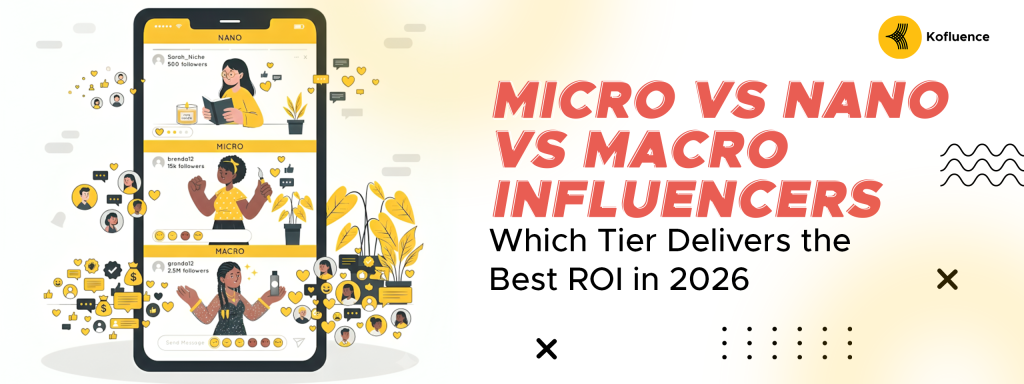
Match audience, category, and values, mixing nano influencers, micro influencers, and macro influencers by role rather than follower count when building creator partnerships.
Create Shoppable Content
Produce mobile-first shoppable content with clear calls to action.
Use Affiliate Tracking Links
Deploy unique affiliate marketing links and codes for every creator to keep attribution clean.
Measure Campaign Performance
Track outcomes continuously through a capable influencer marketing platform so each campaign sharpens the next.
Key Metrics to Measure Creator Commerce Success
| Key Metric | Description |
|---|---|
| Engagement Rate | Measures how actively audiences interact with creator content through likes, comments, shares, and saves. It is an early indicator of audience trust and commerce potential. |
| Click-Through Rate (CTR) | Measures the percentage of viewers who click on a product link, CTA, or landing page. It shows how effectively creator content drives action. |
| Conversion Rate | Measures the percentage of clicks that result in a purchase or desired action. It indicates how well creator traffic converts into sales. |
| Return on Ad Spend (ROAS) | Calculates the revenue generated for every rupee spent on a creator campaign. It helps evaluate campaign profitability. |
| Customer Acquisition Cost (CAC) | Measures the average cost of acquiring a new customer through creator campaigns. It helps determine acquisition efficiency. |
| Average Order Value (AOV) | Measures the average amount customers spend per order. It provides insights into customer purchasing behavior and revenue growth. |
Best Practices for Creator Commerce Campaigns
Partner with Micro and Regional Creators
- Partner with Micro and Regional Creators: Collaborate with regional influencers and creators from Tier 2 and Tier 3 cities to build trust, reach niche audiences, and drive higher conversions at a lower cost.
- Focus on Authentic Storytelling: Allow creators to showcase products in their own style and voice, as genuine recommendations consistently perform better than scripted promotions.
- Optimize for Mobile Commerce: Ensure landing pages, product listings, and creative assets are mobile-friendly since most Indian consumers shop using smartphones.
- Combine Live Commerce with Affiliate Marketing: Integrate live shopping sessions with affiliate links to create purchase urgency while accurately tracking sales and campaign performance.
Creator Commerce Trends to Watch in 2026
AI-Powered Creator Recommendations
AI now powers creator discovery and product recommendations with growing precision.
Live Commerce Growth
Live commerce keeps rising as platforms invest in livestream shopping tools.
Vernacular Content Commerce
Vernacular creators drive commerce deeper into Bharat, where regional-language content converts strongly.
Social Commerce Expansion
Social commerce expands across platforms and the ONDC network, widening paths from content to purchase.
Creator-Owned Brands
More creators launch their own brands and storefronts, turning trust into brand ambassador programs and owned product lines.
Challenges in Creator Commerce
- Attribution and Tracking: Accurately measuring customer journeys across multiple platforms can be challenging, making reliable attribution and tracking tools essential for evaluating campaign performance.
- Choosing the Right Creators: Selecting creators with genuine influence, relevant audiences, and strong engagement requires careful evaluation beyond follower counts.
- Maintaining Authenticity: Scaling creator campaigns while preserving authentic content requires balancing creative freedom with clear brand guidelines.
- Regulatory Compliance: Brands must follow influencer marketing regulations, including ASCI guidelines and applicable tax requirements, to maintain transparency and consumer trust.
Real-World Examples of Creator Commerce
- Beauty Brands: Beauty companies use creator tutorials, product reviews, and live shopping sessions to build trust and encourage direct purchases through shoppable content.
- Fashion and Lifestyle: Fashion and lifestyle brands drive sales with styling videos, outfit inspiration, and livestream shopping experiences that showcase products in real time.
- Consumer Electronics: Electronics brands partner with creators to demonstrate product features, compare devices, and help consumers make informed buying decisions.
- D2C Brands in India: Direct-to-consumer brands leverage creator commerce, affiliate marketing, and social commerce to turn product discovery into measurable online sales.
Conclusion
Creator Commerce has become the bridge between content and revenue for Indian brands, delivering higher trust, stronger consumer engagement, measurable ROAS, and efficient acquisition inside the content audiences already choose to watch. As India’s creator economy scales toward a multi-billion-dollar contribution to e-commerce, the brands that build creator commerce into their core strategy will own the relationships that convert.
For a deeper view, Kofluence’s Influencer Marketing Report and ongoing Influencer Marketing Trends coverage point toward a more shoppable, creator-led future, and as a social media influencer marketing agency, Kofluence helps brands turn that shift into measurable sales.
Frequently Asked Questions
What is creator commerce?
Creator Commerce is creators driving product discovery and sales directly through their content, blending content commerce and social commerce to move audiences from watching to buying.
How is creator commerce different from influencer marketing?
Influencer marketing builds awareness, while creator commerce drives measurable sales, using affiliate links, storefronts, and shoppable content to attribute influencer sales to specific creators.
How do creators make money through creator commerce?
Through affiliate commissions, sponsored brand collaborations, revenue sharing, and performance-based campaigns, rewarding creators for the sales their content generates.
What are the best creator commerce platforms?
In India, leading options include Instagram Shopping, YouTube Shopping, Meesho Live, JioMart, Flipkart Creator Studio, the Amazon Influencer Program, and the Myntra Creator Program.
Is creator commerce suitable for small businesses?
Yes. Small businesses and D2C brands gain strongly from nano influencers and micro influencers, who deliver high trust and conversion at an efficient cost.
What metrics should brands track?
Track engagement rate, Click-Through Rate (CTR), conversion rate, Return on Ad Spend (ROAS), Customer Acquisition Cost (CAC), and Average Order Value (AOV).